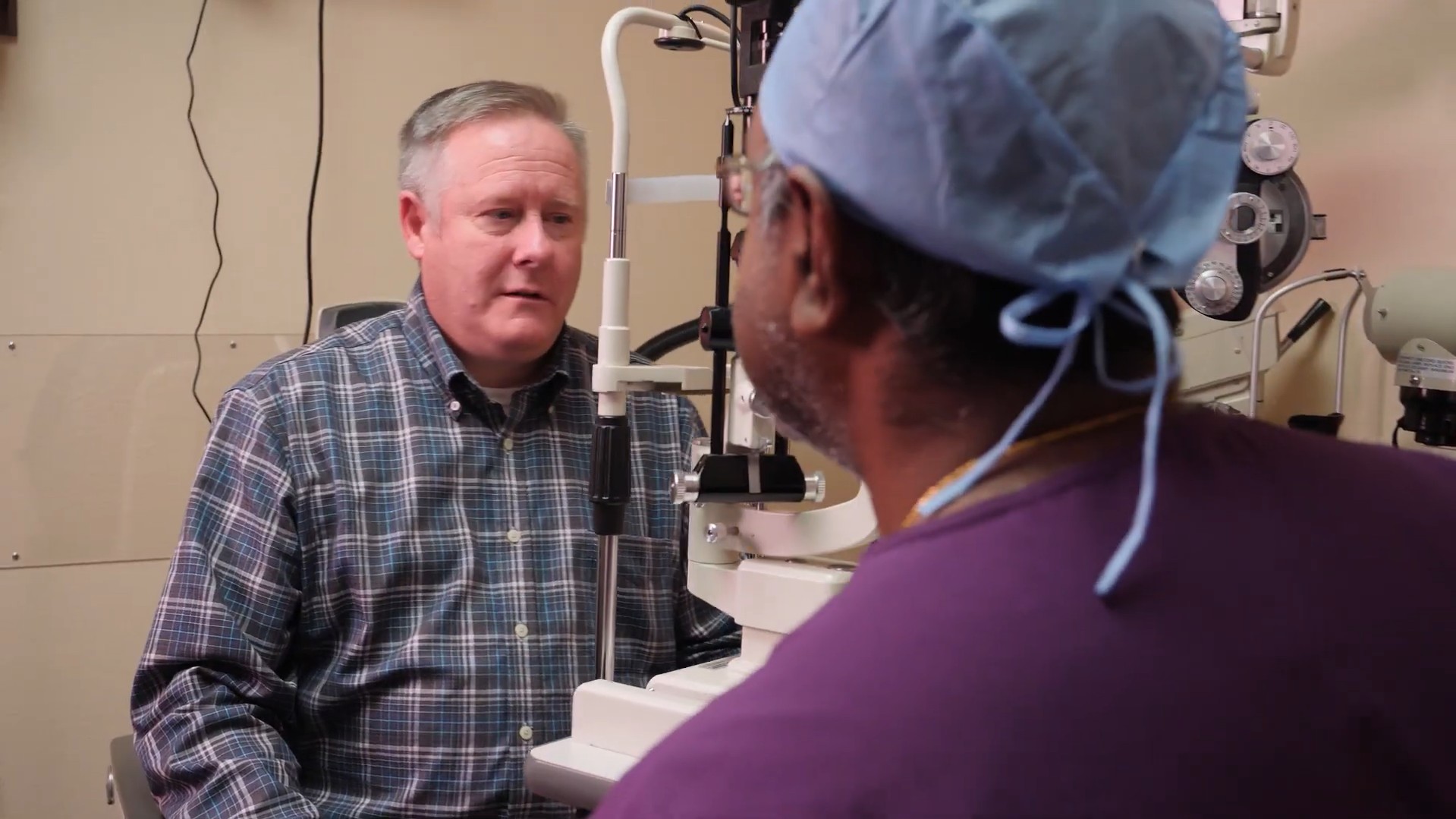
When your vision becomes increasingly blurry and distorted despite trying multiple pairs of glasses or contacts, the cause might be keratoconus, a progressive eye condition that affects the structure of your cornea. Pacific ClearVision Institute specializes in advanced keratoconus treatments that can halt disease progression and restore clearer vision. Our team understands how this condition impacts your daily life, from difficulty reading and driving to challenges with recognizing faces, and we’re committed to providing effective solutions tailored to your unique needs.
Keratoconus
Understanding Keratoconus
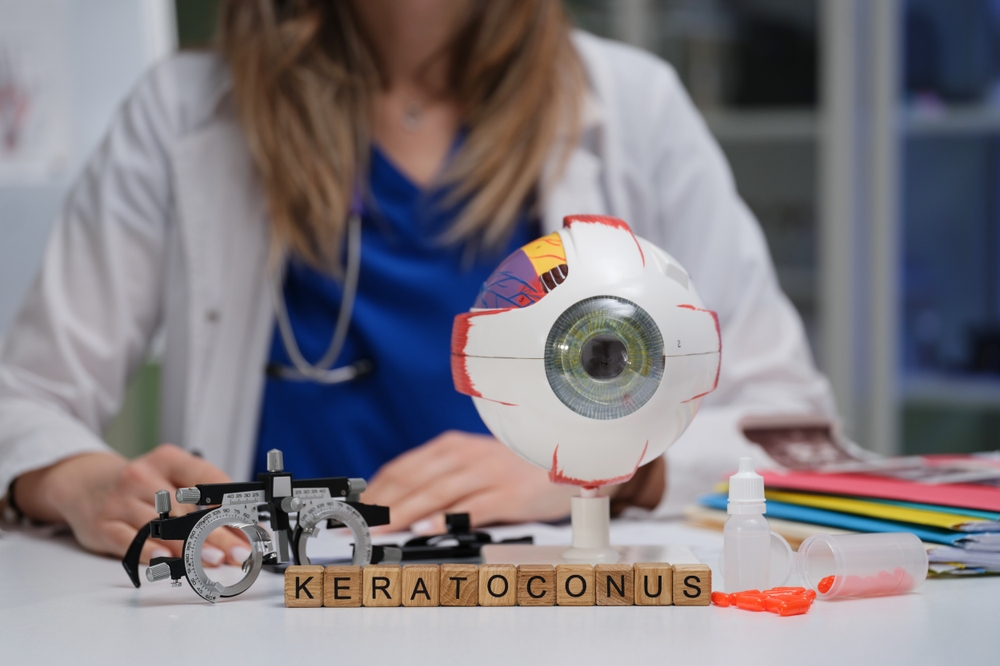
Keratoconus is a vision-threatening condition where your cornea, the clear, dome-shaped front window of your eye, gradually weakens and bulges outward into an irregular cone shape instead of maintaining its normal spherical curve. This structural change distorts the way light enters your eye, causing progressive vision problems that glasses alone cannot correct. You might notice your contacts frequently fall out due to the irregular corneal surface, or you may experience increasing sensitivity to light and glare.
As keratoconus advances, the thinning and bulging of your cornea can lead to significant visual impairment, corneal scarring, and, in some cases, discomfort or pain. Without proper treatment, the condition may progress to end-stage keratoconus, which could require a corneal transplant, a major surgical procedure with substantial risks both during surgery and throughout your lifetime. Early intervention with modern treatment options can help you avoid these more invasive procedures while preserving your vision and quality of life.
Keratoconus Procedures We Offer
Intacs (Intrastromal Corneal Ring Segments)
Intacs are small, crescent-shaped plastic ring segments that we carefully insert into your cornea to provide structural support and restore a more normal, spherical shape. This minimally invasive outpatient procedure takes approximately ten minutes and uses a highly precise femtosecond laser to create channels within your corneal tissue. By flattening the central cone characteristic of keratoconus, Intacs can significantly reduce the nearsightedness and irregular astigmatism caused by the condition, often allowing younger patients to wear soft contact lenses comfortably again.
Corneal Collagen Crosslinking (CXL)
Corneal Collagen Crosslinking strengthens your cornea by creating new bonds within the corneal tissue to halt disease progression. During this procedure, we apply a riboflavin solution to your cornea and then expose it to controlled ultraviolet light, which induces the formation of collagen crosslinks that act as natural anchors. This process increases the density and rigidity of your corneal tissue, preventing further thinning and distortion that characterizes progressive keratoconus.
Crosslinking is an outpatient procedure that takes about 30-40 minutes to perform and uses Vitamin B2 solution with an ultraviolet light to stiffen the cornea. It helps stop the progression of keratoconus and dramatically reduces the need for a cornea transplant in the future. It can be done before, after, or at the same time as Intacs. Depending on a few factors (age, the status of progression, the power of the eye, and corneal shape) a patient may need 1 or both treatments (Intacs and crosslinking).
Severe keratoconus patients may need a cornea transplant if they are not eligible for Intacs or crosslinking. This is often the case if there is corneal scarring or a history of corneal hydrops (prior rupture of the back of the cornea). Transplantation can be done with either full-thickness or partial-thickness techniques. Transplantation can generally achieve an excellent outcome with proper care, which includes regular and frequent postoperative visits & treatment with eyedrops for years to prevent rejection, as well as contact lenses and/or glasses.
Read More
At Pacific ClearVision Institute we investigate, learn and scrutinize the latest techniques and treatments for all of our patients here in the Greater Eugene, Oregon area. We strive to ensure that you, our community, have the best eye care options available to you. If you have keratoconus and want to discuss ALL of the options available to you, talk to one of our ophthalmologists and let us help you determine what the best treatment option is for you.
While there are a wide range of treatment options available we are particularly proud to offer the AvaGen™ Eye Test.
AvaGen™ is the genetic eye test that provides answers on your risk for keratoconus and other corneal diseases, helping you and your doctor make confident eye care decisions now.
The one of a kind AvaGen™ test is:
- Personalized: Uses your DNA to assess your risk of keratoconus, and if you have a corneal dystrophy.
- Preemptive: Finds potential problems before symptoms occur which allows for proactive management and treatment.
- Painless: A sample is taken from the inside of your cheek with a cotton swab.


Risks of Delaying Keratoconus Treatment Process
Comparing Transplant Risk to Treatment Risk
Waiting to treat keratoconus does not save money. As the cornea keeps thinning, more people need a corneal transplant, a bigger procedure with years of follow-up drops and visits. Intacs and CXL cost less to plan for upfront, and Pacific ClearVision Institute accepts CareCredit financing and the Alphaeon Credit Card to help spread out the cost. Check with your insurance provider directly, since coverage varies by plan.
“We found that corneal cross-linking may decrease costs and improve vision-related quality-of-life.”
Journal of Medical Economics
What Happens If Keratoconus Goes Untreated
Keratoconus does not stay the same. Left untreated, the cornea keeps thinning and bulging, which can lead to scarring and vision that glasses cannot fix. Intacs and corneal collagen crosslinking are built to stop that progression, not add to it, and Pacific ClearVision Institute uses corneal topography to map your eyes and match you to the right combination of treatments. Many patients who start treatment before advanced stages avoid needing a transplant altogether.
“a consideration for about 10-15% of individuals with keratoconus.”
National Keratoconus Foundation, Gavin Herbert Eye Institute, UC Irvine
Comparing Transplant Risk to Treatment Risk
A cornea that keeps weakening raises your odds of eventually needing transplant surgery, which carries its own surgical risks and years of follow-up care. Intacs and CXL are both performed as outpatient procedures, and Pacific ClearVision Institute walks you through recovery guidelines, including prescribed drops and protective eyewear, right after your procedure. Follow-up visits are scheduled afterward to track healing and catch any concerns early. This built-in monitoring is designed to keep your treatment on track.
“CXL is a safe and effective treatment for avoiding keratoconus progression.”
Medical Sciences (peer-reviewed journal, hosted via NIH/NCBI)
Why Choose Our Treatment Options for Keratoconus
At Pacific ClearVision Institute, we recognize that watching your vision deteriorate despite new prescriptions and contact lens adjustments creates real anxiety about your future. Our ophthalmologists bring years of focused experience in corneal disorders, specifically in performing Intacs insertions and crosslinking procedures that can stop keratoconus from progressing further.
We don’t rush through appointments or use confusing medical terminology, instead, we sit down with you to examine your corneal maps together, explain exactly what’s happening in your eyes, and discuss which treatment options make sense for your situation. Many of our patients come to us after being told they’ll eventually need a transplant, but our combined Intacs and CXL approach has helped numerous individuals stabilize their corneas and avoid that outcome entirely. You’ll work directly with experienced specialists who stay current with the latest research and techniques, ensuring you receive treatment backed by both clinical evidence and real-world results.
Find Relief from Progressive Vision Loss!
Keratoconus doesn’t improve on its own, and delaying treatment allows further corneal thinning and distortion that becomes harder to manage over time. The Intacs and crosslinking procedures available at Pacific ClearVision Institute can halt progression, improve your vision, and help you avoid the risks associated with corneal transplant surgery.
Schedule your evaluation with us in Eugene, Oregon, and we’ll determine whether you’re a candidate for these vision-preserving treatments. Connect with Pacific ClearVision Institute on our Facebook and Instagram pages to see patient testimonials and learn about the latest developments in keratoconus care. Call our office today at 541-343-5000 to book your comprehensive assessment and start protecting your eyesight.

FAQs
What is keratoconus?
Keratoconus is a progressive eye disorder in which your cornea gradually thins and bulges outward into an irregular cone shape instead of maintaining its normal rounded dome. This structural change causes light entering your eye to scatter, resulting in distorted and blurred vision that worsens over time. The condition typically begins during teenage years or early twenties and can affect one or both eyes, though it often progresses at different rates in each eye.
Can keratoconus be cured?
While keratoconus cannot be completely cured, modern treatments like Intacs and corneal collagen crosslinking can effectively halt disease progression and significantly improve your vision. These procedures address both the irregular shape of your cornea and its underlying structural weakness, helping you avoid more invasive surgeries like corneal transplants. With appropriate treatment, many patients achieve stable vision and maintain their quality of life without experiencing further corneal deterioration.
What causes keratoconus?
The exact cause of keratoconus remains unclear, but research suggests it results from a combination of genetic, environmental, and hormonal factors that weaken the structural proteins in your cornea. Chronic eye rubbing, which may be related to allergies or eye irritation, has been strongly associated with the development and progression of the condition. Other risk factors include certain connective tissue disorders, prolonged ultraviolet light exposure, and chronic eye inflammation.
Is keratoconus genetic?
Keratoconus does have a genetic component, as approximately 10 to 15 percent of people with the condition have a family member who also has it. However, the inheritance pattern is complex and not fully understood, meaning that having a family history doesn’t guarantee you’ll develop the condition. If you have keratoconus, your family members may benefit from regular eye examinations to detect early signs of corneal changes.
Does keratoconus lead to blindness?
Keratoconus rarely causes complete blindness, but without proper treatment, it can lead to severe vision impairment that significantly affects your daily activities. Advanced cases may result in corneal scarring and extreme distortion that cannot be corrected with standard glasses or contacts, potentially requiring a corneal transplant. Early detection and modern treatment options like crosslinking and Intacs can prevent progression to these advanced stages, helping you maintain functional vision throughout your life.